 Skip-the-line available
 The Best Time to Visit the Boboli Gardens
A month-by-month guide to crowds, timed-entry slots, the quiet early hours, the seasonal closing times, and the summer heat that shapes every visit to Florence's Medici garden.
The Boboli Gardens are an open-air hillside behind Palazzo Pitti, so when you visit shapes the day more than at any indoor museum — the light, the heat and the crowds all swing hard across the year. Entry is by reserved time window; the first morning slot and the cool of late afternoon are consistently the most pleasant, while mid-morning is the busiest and, in July and August, the hottest part of an unshaded climb to the Gloriette-topped terraces. This guide breaks the year down by season, flags the high-season and holiday peaks, and explains how the seasonal closing times and Florence's rhythms change the old advice about simply turning up at the gate.
When is the best time of day to visit the Boboli Gardens?
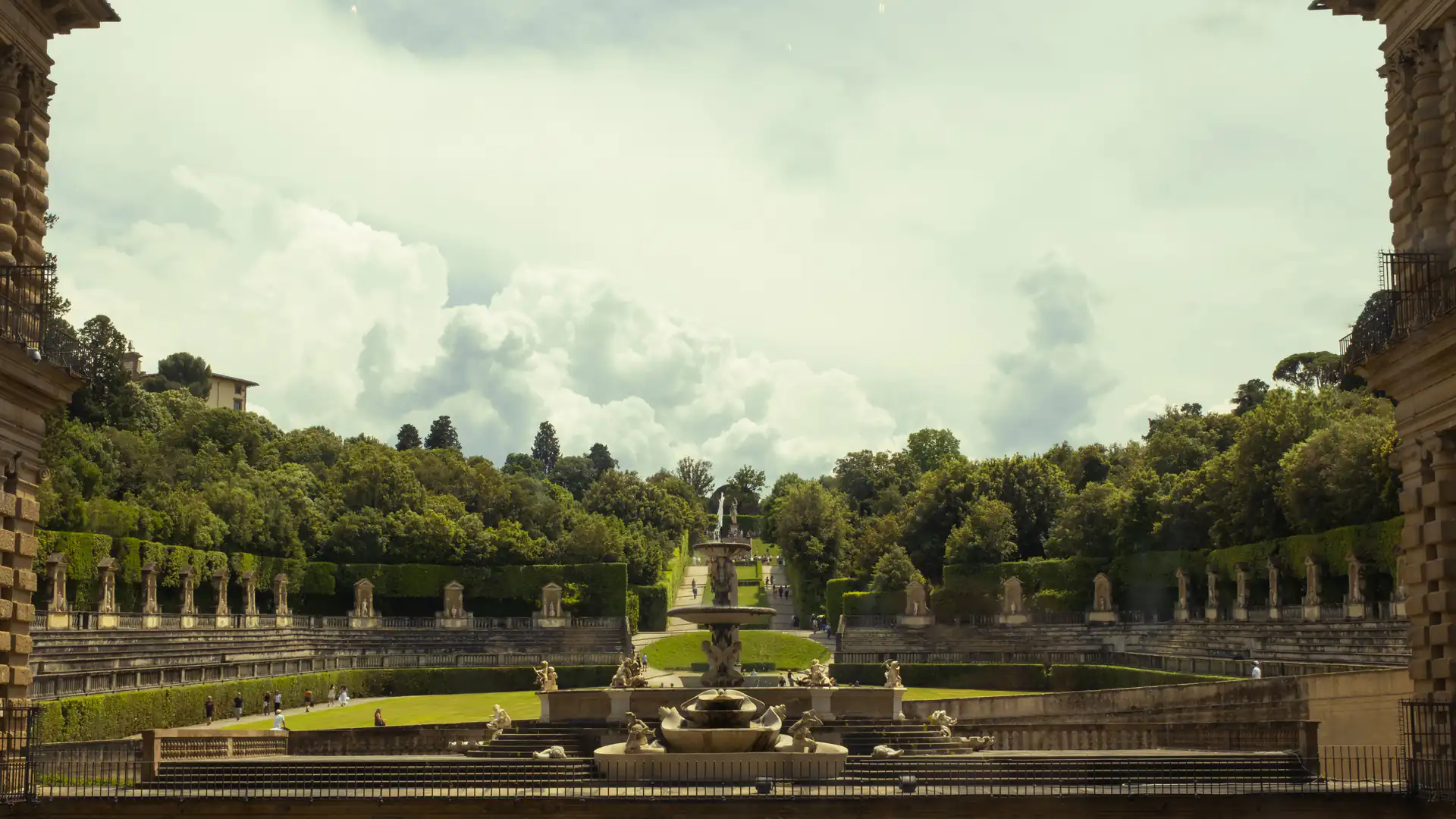
The best time of day to enter the Boboli Gardens is the first reserved slot of the morning, before the coach groups arrive from the Uffizi across the river. In the early window the terraces are cool, the light rakes softly across the Amphitheatre behind Palazzo Pitti, and the long climb to the Kaffeehaus and the Forte di Belvedere views is comfortable rather than punishing. Mid-morning, roughly 10:00 to 12:00, is the busiest stretch as day-trippers funnel up from Piazza Pitti. Late afternoon is the second-quietest window: groups leave for the city centre, the low sun gilds the Isolotto and its Fountain of the Ocean, and the heat has eased. Because Boboli is a hillside with little shade on the open avenues, the practical rule is simple — come early for calm, or late for light, and avoid the midday climb in high summer.
The Boboli Gardens close on the first and last Monday of each month, so those two days are the single most important dates to check before you plan. Opening runs from the morning through to late afternoon, with the closing hour shifting sharply by season and last admission set an hour before the gates shut. Arrive ten to fifteen minutes ahead of your reserved window: the ticketed entrance is inside the courtyard of Palazzo Pitti, a short walk up from Piazza Pitti, and reaching the first terraces takes a few minutes on foot. Allow at least ninety minutes inside to reach the top of the Viottolone cypress avenue and the Isolotto and return — two hours if you want the Porcelain Museum in the Casino del Cavaliere and the Belvedere panorama over Florence. Reaching the upper terraces from the courtyard takes a further few minutes on foot up a gentle rise, so build that into your buffer.
What is the best season to visit the Boboli Gardens?
The best seasons to visit the Boboli Gardens are spring and early autumn — roughly April to May and late September to October — when Florence's weather is mild, the box hedges and citrus are at their greenest, and the open terraces are comfortable rather than baking. In those months the light is soft on the ochre facade of Palazzo Pitti, the fountains run, and the long climb to the Forte di Belvedere views is a pleasure rather than an effort. Summer, from June through August, is the hottest and busiest stretch, and the days around Ferragosto on 15 August are the tightest window of the year. If you can only come in high summer, book the first morning slot or a late-afternoon one, carry water, and use the shaded cypress tunnel of the Viottolone that Giulio Parigi laid out around 1618 for the climb.
Winter is the quietest and most atmospheric season in the Boboli Gardens, though it is also the season of the shortest days and earliest closing. The formal parterres are bare and the fountains may be drained against frost, but the sculpture — the Egyptian obelisk on the Amphitheatre, the Neptune fountain by Stoldo Lorenzi, and the Roman antiquities set among the hedges — reads more clearly without summer greenery, and the low sun over Florence from the upper terraces is superb. Crowds thin to a trickle on weekday mornings. The trade-off is the closing time: Boboli shuts in the late afternoon in winter, around 16:30, so plan a compact route and start early to reach the Isolotto and the Kaffeehaus terrace before the gates close and the light goes. Wrap up warmly, since the exposed upper terraces near the Forte di Belvedere catch the wind, and check the exact closing hour for your date before you plan a late-day winter visit.
Which months are busiest, and when should I avoid the Boboli Gardens?
The Boboli Gardens are busiest from April through October, with July and August the most crowded and hottest months and the days around Ferragosto — the Italian public holiday on 15 August — the single tightest window, when Florence fills with domestic visitors and the heat on the unshaded terraces peaks. Easter week and the long weekends of late April and early May also draw sharp crowds. The garden itself, being a large hillside of around 45,000 square metres, absorbs visitors better than the packed rooms of the Uffizi, so it rarely feels a genuine crush — but the entrance courtyard at Palazzo Pitti and the climb up from the Amphitheatre can queue at peak times. Reserving a timed slot spaces arrivals, so the practical concern in peak season is heat and closing time rather than gridlock.
The quietest times to visit the Boboli Gardens are winter weekday mornings and the first slot of any day in the shoulder seasons. Because the garden closes on the first and last Monday of each month, those Mondays are effectively off the table and push extra visitors onto the surrounding days — worth knowing when you build a Florence itinerary around Palazzo Pitti. Rain thins the crowds sharply but makes the steep gravel paths and stone steps slippery, so a bright day after rain is often the sweet spot: fewer people, washed light, and the fountains full. Whatever the month, the single most reliable way to dodge both crowds and heat is to book the earliest morning window and walk the upper terraces first, before the mid-morning groups arrive from across the Arno. On a fine day the fountains and the sculpture read at their best, making the early hour doubly worthwhile at the Isolotto and the Amphitheatre alike.
How does the summer heat affect a Boboli Gardens visit?
Florence sits in a river basin that traps heat, so the Boboli Gardens can be genuinely punishing in July and August, when afternoon highs often climb into the mid-to-high thirties Celsius. The garden is a south-facing hillside with long, unshaded gravel avenues, a steep climb from the Amphitheatre to the Kaffeehaus and the Forte di Belvedere, and little water for drinking along the route. In peak summer the mid-morning-to-mid-afternoon band is the hardest going. The concierge recommendation is to book the first slot after opening or a late-afternoon window, carry a full water bottle, wear a hat and proper shoes for gravel, and use the shaded Viottolone cypress tunnel for the ascent. The Isolotto and its Fountain of the Ocean, ringed by water, is the coolest corner to pause in the heat of the day.
The seasonal shift in closing time matters most in summer, because it is precisely then that a late-afternoon slot becomes the smart choice. In high summer the Boboli Gardens stay open later into the evening — closing can extend to around 18:30 or 19:30 depending on the month — which opens a cool, gilded window after the worst of the day's heat has passed and the day-tour groups have left. Entering in the last two or three hours lets you climb the terraces in falling temperatures, watch the sun drop over the domes of Florence from the upper walks, and reach the Isolotto for golden-hour light on the Ocean fountain. Always confirm the current closing hour and the one-hour-before last-admission cut-off for your exact date before booking a late slot. Pausing by the water on the Isolotto is the coolest way to break the climb in the heat of the afternoon.
How should I fit the Boboli Gardens into a Florence itinerary?
Plan on roughly two hours in the Boboli Gardens to do the main route justice: the Amphitheatre and Neptune fountain behind Palazzo Pitti, the climb to the Kaffeehaus and the Forte di Belvedere panorama, the long descent of the Viottolone cypress avenue to the Isolotto and its Fountain of the Ocean, and the Porcelain Museum in the Casino del Cavaliere if it is open. The garden shares its entrance courtyard with Palazzo Pitti in the Oltrarno, on the south bank of the Arno a short walk from the Ponte Vecchio, so it pairs naturally with the palace's Palatine Gallery. A common concierge plan is a morning inside Palazzo Pitti's galleries, lunch in the Oltrarno, then the garden in the calmer, cooler afternoon light. The garden's timed slot fixes the anchor of the day, while the palace galleries and a riverside lunch in the Oltrarno flex around it, and the Ponte Vecchio lies only a few minutes' walk back toward the centre.
Because the Boboli Gardens sit within Florence's UNESCO-listed historic centre, they slot easily into a wider walking day on foot. From the garden's Piazza Pitti entrance it is a few minutes down to the Ponte Vecchio and the Uffizi on the north bank, and a short climb the other way to Piazzale Michelangelo for the classic Florence panorama. The concierge recommendation for a full day is to reserve the garden's first morning slot while it is cool, then cross the river to the historic centre for the busier midday hours indoors, saving Palazzo Pitti's galleries for the afternoon. Booking Boboli's timed window first anchors the day, since its entry time is fixed while the surrounding sights on the north bank can flex around it. Reserving the garden's window before the flexible north-bank sights keeps the whole plan coherent, and the compact scale of the historic centre means every leg is a short, pleasant walk on foot.
Frequently asked
What is the best time of day to visit the Boboli Gardens?
The first reserved slot of the morning is the coolest and quietest, before groups arrive from across the Arno. Late afternoon is the second-calmest window, with soft light on the Isolotto. Mid-morning, around 10:00 to 12:00, is the busiest.
What is the best season to visit the Boboli Gardens?
Spring (April–May) and early autumn (late September–October) are best: mild weather, green terraces and comfortable walking. Summer is hottest and busiest; winter is quietest but has the shortest days and earliest closing, around 16:30.
Which days are the Boboli Gardens closed?
The Boboli Gardens close on the first and last Monday of each month. Check those two dates before planning, as they are the most common reason a visit falls through. Opening hours also vary by season.
When are the Boboli Gardens busiest?
April through October, peaking in July and August. The days around Ferragosto (15 August) are the single tightest window, along with Easter week. Being a large hillside, the garden absorbs crowds better than the Uffizi's rooms.
How hot does the Boboli Gardens get in summer?
Florence afternoon highs often reach the mid-to-high thirties Celsius in July and August. The garden is a south-facing hillside with long, unshaded avenues, so a first-morning or late-afternoon slot, water and a hat are strongly recommended.
How long should I spend in the Boboli Gardens?
Allow about two hours for the main route — the Amphitheatre, the climb to the Kaffeehaus and Belvedere views, and the Viottolone down to the Isolotto. Ninety minutes is enough for a brisk visit; add time for the Porcelain Museum.
Do the Boboli Gardens close later in summer?
Yes. In high summer the gardens stay open later into the evening, with closing extending to around 18:30 or 19:30 depending on the month. Last admission is an hour before closing, which makes a late-afternoon slot ideal in the heat.
Should I visit the Boboli Gardens before or after Palazzo Pitti?
The garden and palace share an entrance courtyard on Piazza Pitti. A common plan is the galleries in the morning and the garden in the cooler afternoon — or, in summer, the garden's first slot while it is cool, then the palace indoors at midday.
Is it worth visiting the Boboli Gardens in winter?
Yes. Winter is the quietest, most atmospheric season, with the sculpture reading clearly against bare parterres and superb low light over Florence. The trade-off is short days and closing around 16:30, so start early and keep the route compact.